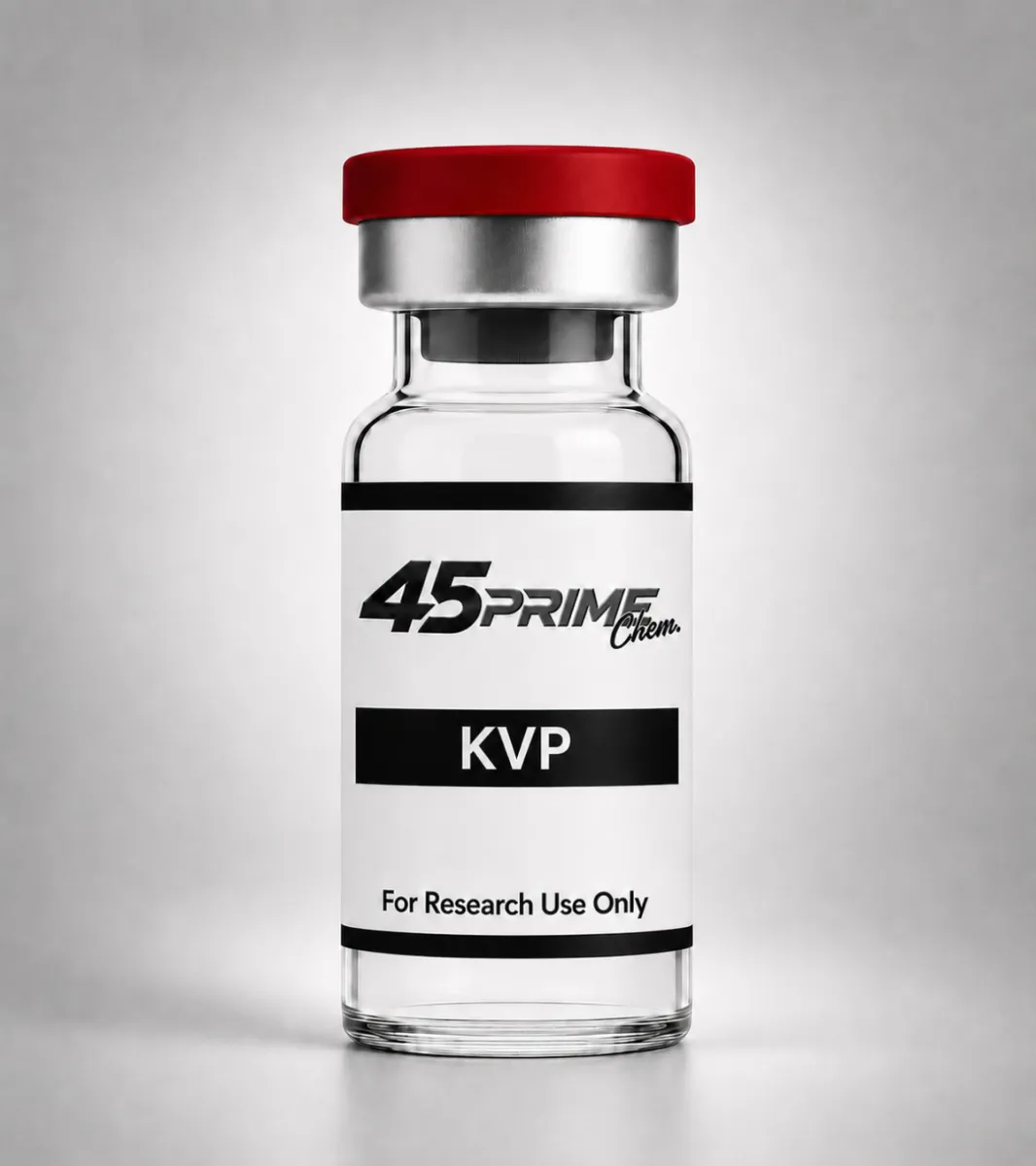
# KPV
### The tripeptide researched for its potential role in inflammation regulation and tissue protection.
**KPV (Lys-Pro-Val)** is a small tripeptide made up of the amino acids lysine, proline, and valine. It corresponds to the C-terminal fragment of the hormone α-MSH (alpha-melanocyte-stimulating hormone), a molecule related to the regulation of inflammatory and immunological processes.
KPV has sparked scientific interest particularly for its possible influence on cellular pathways related to inflammation, the integrity of epithelial barriers, and the immune response.
## What is it?
KPV is a fragment of three amino acids:
**K — Lysine**
**P — Proline**
**V — Valine**
It is the C-terminal segment of α-MSH that has been independently studied for its potential anti-inflammatory properties.
In short:
• It is a very small tripeptide.
• It is primarily researched for its potential anti-inflammatory activity.
• It has been studied in models related to the intestine, skin, and immune response.
## How does it work?
Experimental research suggests that KPV may influence different signaling pathways related to inflammation.
Among the most studied pathways is **NF-κB**, an important regulator of the expression of numerous inflammatory mediators.
Its interaction with pathways related to **MAPK** and with transporters present in epithelial cells, including PepT1, has also been investigated.
## What does science investigate?
• Intestinal inflammation.
• Integrity of the intestinal barrier.
• Inflammation and skin repair.
• Regulation of inflammatory mediators.
• NF-κB and MAPK signaling.
• Immune response.
• Antimicrobial activity.
• Communication between epithelial cells and the immune system.
## What results have studies observed?
Preclinical studies have found interesting results related to:
• Modulation of inflammatory signals.
• Experimental reduction of certain pro-inflammatory mediators.
• Influence on intestinal inflammatory processes in animal models.
• Possible protection of the barrier function of epithelial tissues.
• Antimicrobial activity observed in certain experimental models.
However, it is important to highlight that **most of this evidence comes from cellular and animal studies**, and there are still not enough controlled clinical trials in humans to establish its therapeutic efficacy.
## What makes KPV different?
One of the most interesting characteristics of KPV is its extremely small size.
Despite being composed of only three amino acids, it retains biological properties related to the α-MSH fragment from which it derives.
Additionally, unlike complete α-MSH, KPV is primarily studied for its possible properties related to inflammation, without focusing on the pigmentation effects characteristic of the full hormone.
## What does it NOT do?
• It does not guarantee the elimination of inflammation.
• It is not a proven treatment for inflammatory diseases.
• It does not replace prescribed medications for intestinal, dermatological, or immunological diseases.
• It does not guarantee tissue repair in humans.
• It should not be considered a substitute for established medical treatments.
• Long-term safety and efficacy in humans still require further research.
## Why is it so well-known?
KPV has become especially known within peptide research for its possible relation to **inflammation, intestine, and epithelial barriers**.
Unlike other peptides primarily researched for growth, metabolism, or muscle recovery, KPV is studied mainly from the perspective of **inflammation biology and immune regulation**.
## Interesting fact
One of the areas that has generated interest is the study of KPV in intestinal models.
Experimental research has explored its interaction with **PepT1**, a transporter present in intestinal cells, and how this interaction could influence inflammatory processes within intestinal tissue.
## Is this peptide for you?
If you are interested in learning about:
• Inflammation.
• Intestinal health.
• Intestinal barrier.
• Skin biology.
• Immune system.
• Cellular signaling.
• NF-κB and MAPK.
• Research on anti-inflammatory peptides.
**KPV** is one of the small peptides that has generated interest within experimental research on inflammatory regulation.
## Did you know?
KPV is just a small section of a much larger molecule: **α-MSH**.
The study of this fragment has helped researchers explore whether certain biological properties of α-MSH can be preserved using only a sequence of three amino acids.
This makes KPV an interesting example of how small protein fragments can exhibit their own biological activities.
### NOTICE
**Product intended for research use only (For Research Use Only).**
The information presented is for educational and scientific purposes. It does not constitute medical advice, diagnosis, or treatment.
The available evidence on KPV is predominantly preclinical, so results observed in cellular or animal models **cannot be considered equivalent to clinical efficacy in humans**. Further clinical studies are needed to determine its safety, efficacy, and potential applications.
### The tripeptide researched for its potential role in inflammation regulation and tissue protection.
**KPV (Lys-Pro-Val)** is a small tripeptide made up of the amino acids lysine, proline, and valine. It corresponds to the C-terminal fragment of the hormone α-MSH (alpha-melanocyte-stimulating hormone), a molecule related to the regulation of inflammatory and immunological processes.
KPV has sparked scientific interest particularly for its possible influence on cellular pathways related to inflammation, the integrity of epithelial barriers, and the immune response.
## What is it?
KPV is a fragment of three amino acids:
**K — Lysine**
**P — Proline**
**V — Valine**
It is the C-terminal segment of α-MSH that has been independently studied for its potential anti-inflammatory properties.
In short:
• It is a very small tripeptide.
• It is primarily researched for its potential anti-inflammatory activity.
• It has been studied in models related to the intestine, skin, and immune response.
## How does it work?
Experimental research suggests that KPV may influence different signaling pathways related to inflammation.
Among the most studied pathways is **NF-κB**, an important regulator of the expression of numerous inflammatory mediators.
Its interaction with pathways related to **MAPK** and with transporters present in epithelial cells, including PepT1, has also been investigated.
## What does science investigate?
• Intestinal inflammation.
• Integrity of the intestinal barrier.
• Inflammation and skin repair.
• Regulation of inflammatory mediators.
• NF-κB and MAPK signaling.
• Immune response.
• Antimicrobial activity.
• Communication between epithelial cells and the immune system.
## What results have studies observed?
Preclinical studies have found interesting results related to:
• Modulation of inflammatory signals.
• Experimental reduction of certain pro-inflammatory mediators.
• Influence on intestinal inflammatory processes in animal models.
• Possible protection of the barrier function of epithelial tissues.
• Antimicrobial activity observed in certain experimental models.
However, it is important to highlight that **most of this evidence comes from cellular and animal studies**, and there are still not enough controlled clinical trials in humans to establish its therapeutic efficacy.
## What makes KPV different?
One of the most interesting characteristics of KPV is its extremely small size.
Despite being composed of only three amino acids, it retains biological properties related to the α-MSH fragment from which it derives.
Additionally, unlike complete α-MSH, KPV is primarily studied for its possible properties related to inflammation, without focusing on the pigmentation effects characteristic of the full hormone.
## What does it NOT do?
• It does not guarantee the elimination of inflammation.
• It is not a proven treatment for inflammatory diseases.
• It does not replace prescribed medications for intestinal, dermatological, or immunological diseases.
• It does not guarantee tissue repair in humans.
• It should not be considered a substitute for established medical treatments.
• Long-term safety and efficacy in humans still require further research.
## Why is it so well-known?
KPV has become especially known within peptide research for its possible relation to **inflammation, intestine, and epithelial barriers**.
Unlike other peptides primarily researched for growth, metabolism, or muscle recovery, KPV is studied mainly from the perspective of **inflammation biology and immune regulation**.
## Interesting fact
One of the areas that has generated interest is the study of KPV in intestinal models.
Experimental research has explored its interaction with **PepT1**, a transporter present in intestinal cells, and how this interaction could influence inflammatory processes within intestinal tissue.
## Is this peptide for you?
If you are interested in learning about:
• Inflammation.
• Intestinal health.
• Intestinal barrier.
• Skin biology.
• Immune system.
• Cellular signaling.
• NF-κB and MAPK.
• Research on anti-inflammatory peptides.
**KPV** is one of the small peptides that has generated interest within experimental research on inflammatory regulation.
## Did you know?
KPV is just a small section of a much larger molecule: **α-MSH**.
The study of this fragment has helped researchers explore whether certain biological properties of α-MSH can be preserved using only a sequence of three amino acids.
This makes KPV an interesting example of how small protein fragments can exhibit their own biological activities.
### NOTICE
**Product intended for research use only (For Research Use Only).**
The information presented is for educational and scientific purposes. It does not constitute medical advice, diagnosis, or treatment.
The available evidence on KPV is predominantly preclinical, so results observed in cellular or animal models **cannot be considered equivalent to clinical efficacy in humans**. Further clinical studies are needed to determine its safety, efficacy, and potential applications.
Specifications

| SKU | PEP-903 |
|---|---|
| Brand | 45PRIME |
| Unit of measure | UNIDAD |
| Categories | REPAIR / ANTI-AGE |
There are no reviews for this product yet.
Write your review
Sign in to leave a review.
There are no questions about this product yet. Be the first to ask!
Sign in to ask a question about this product.
Work out the concentration and how many units to draw on the syringe for the water you add.
mg
ml
Fill in the three fields to see the result.
Concentration
mg/ml
Volume to draw
ml
Mark on the syringe
units
Doses per vial
doses
The requested dose is larger than what the vial holds.
Research use only. This tool merely calculates the dilution from the figures you enter: it is not a dose recommendation or a use indication.
You might also like
KPV 10mg
Sign in to see the price