
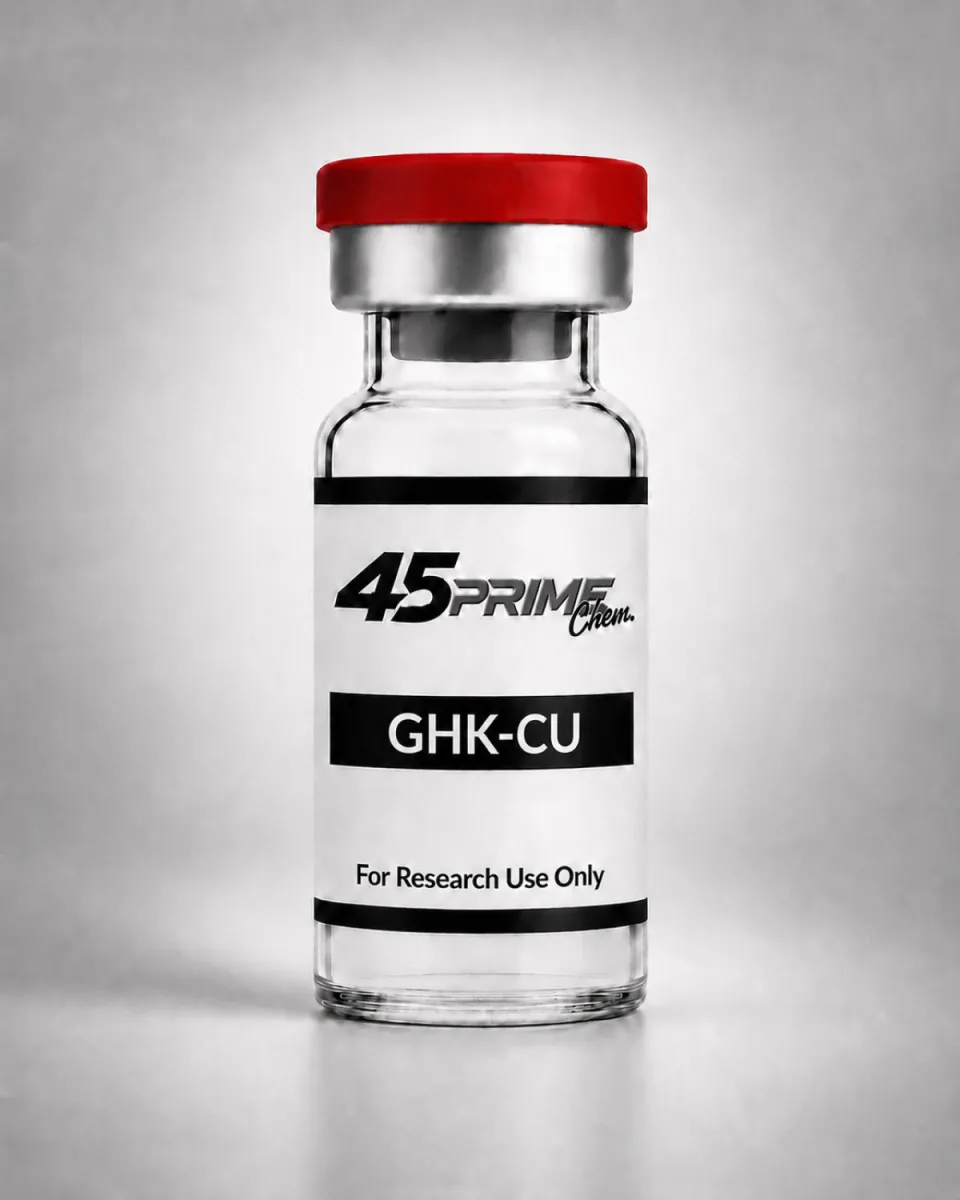
The most researched copper peptide for its potential in skin regeneration and health.
GHK-Cu is a natural peptide bound to copper that has sparked significant scientific interest for its possible role in tissue regeneration, collagen production, and maintaining healthy skin. Discovered in the 1970s, it remains one of the most studied peptides in research on skin aging, wound healing, and cellular repair.
What is it?
GHK-Cu (Glycyl-L-Histidyl-L-Lysine-Copper) is a naturally occurring tripeptide in the body that binds to copper to participate in various biological processes related to tissue repair and maintenance.
In short:
• Helps activate natural processes related to skin and other tissue regeneration.
How does it work?
GHK-Cu has been investigated for its ability to participate in cellular signaling, promote collagen and elastin production, support tissue repair, and contribute to the body's natural response to cellular damage.
What does science investigate?
• Collagen and elastin production.
• Cellular regeneration.
• Wound healing and tissue repair.
• Hair and follicle health.
• Oxidative stress and skin aging.
What results have studies observed?
Research has reported trends such as:
• Increased collagen and elastin production.
• Enhanced skin repair.
• Improvement in the appearance of fine lines and elasticity in some studies.
• Potential support for tissue healing and recovery.
• Interest in its possible role in hair health.
What makes GHK-Cu different?
Unlike many other peptides, GHK-Cu is a compound that naturally exists in the human body. Its levels tend to decrease with age, which has driven numerous investigations into its possible role in regeneration and healthy aging.
What does it NOT do?
• Does not stop the natural aging process.
• Does not guarantee specific aesthetic results.
• Does not replace medical or dermatological treatments.
• Not approved as a drug for treating diseases.
Why is it so well-known?
Because it is one of the most studied peptides in dermatology and regenerative medicine. Its extensive research history has made it a reference for studying processes related to tissue repair, collagen production, and skin health.
Interesting fact
• Natural levels of GHK-Cu decrease with age, which is why researchers have explored its possible relationship with the regenerative capacity of skin and other tissues.
Is this peptide for you?
If you are interested in learning about:
• Collagen production.
• Skin regeneration.
• Wound healing.
• Hair health.
• Research on healthy aging.
GHK-Cu is one of the most recognized peptides in these research areas.
Did you know?
GHK-Cu was identified over five decades ago and continues to be one of the most researched peptides in the field of regenerative medicine. In addition to its possible role in skin health, it has also been studied for its involvement in tissue repair, hair biology, and modulation of inflammatory processes. Although the results are promising, its safety and efficacy for various uses continue to be the subject of research.
Product intended for research use only. The information is educational and does not constitute medical advice, diagnosis, or treatment.
GHK-Cu is a natural peptide bound to copper that has sparked significant scientific interest for its possible role in tissue regeneration, collagen production, and maintaining healthy skin. Discovered in the 1970s, it remains one of the most studied peptides in research on skin aging, wound healing, and cellular repair.
What is it?
GHK-Cu (Glycyl-L-Histidyl-L-Lysine-Copper) is a naturally occurring tripeptide in the body that binds to copper to participate in various biological processes related to tissue repair and maintenance.
In short:
• Helps activate natural processes related to skin and other tissue regeneration.
How does it work?
GHK-Cu has been investigated for its ability to participate in cellular signaling, promote collagen and elastin production, support tissue repair, and contribute to the body's natural response to cellular damage.
What does science investigate?
• Collagen and elastin production.
• Cellular regeneration.
• Wound healing and tissue repair.
• Hair and follicle health.
• Oxidative stress and skin aging.
What results have studies observed?
Research has reported trends such as:
• Increased collagen and elastin production.
• Enhanced skin repair.
• Improvement in the appearance of fine lines and elasticity in some studies.
• Potential support for tissue healing and recovery.
• Interest in its possible role in hair health.
What makes GHK-Cu different?
Unlike many other peptides, GHK-Cu is a compound that naturally exists in the human body. Its levels tend to decrease with age, which has driven numerous investigations into its possible role in regeneration and healthy aging.
What does it NOT do?
• Does not stop the natural aging process.
• Does not guarantee specific aesthetic results.
• Does not replace medical or dermatological treatments.
• Not approved as a drug for treating diseases.
Why is it so well-known?
Because it is one of the most studied peptides in dermatology and regenerative medicine. Its extensive research history has made it a reference for studying processes related to tissue repair, collagen production, and skin health.
Interesting fact
• Natural levels of GHK-Cu decrease with age, which is why researchers have explored its possible relationship with the regenerative capacity of skin and other tissues.
Is this peptide for you?
If you are interested in learning about:
• Collagen production.
• Skin regeneration.
• Wound healing.
• Hair health.
• Research on healthy aging.
GHK-Cu is one of the most recognized peptides in these research areas.
Did you know?
GHK-Cu was identified over five decades ago and continues to be one of the most researched peptides in the field of regenerative medicine. In addition to its possible role in skin health, it has also been studied for its involvement in tissue repair, hair biology, and modulation of inflammatory processes. Although the results are promising, its safety and efficacy for various uses continue to be the subject of research.
Product intended for research use only. The information is educational and does not constitute medical advice, diagnosis, or treatment.
Specifications
| SKU | PEP-018 |
|---|---|
| Brand | 45PRIME |
| Unit of measure | UNIDAD |
| Category | Skin regeneration and health |
| Type | Copper-bound tripeptide |
| Function | Research on tissue repair and collagen production |
| Main research area | Skin, healing, aging, and hair health |
| State | Under research |
| Presentation | Vial 50 mg |
| Categories | REPAIR / ANTI-AGE |
There are no reviews for this product yet.
Write your review
Sign in to leave a review.
There are no questions about this product yet. Be the first to ask!
Sign in to ask a question about this product.
Work out the concentration and how many units to draw on the syringe for the water you add.
mg
ml
Fill in the three fields to see the result.
Concentration
mg/ml
Volume to draw
ml
Mark on the syringe
units
Doses per vial
doses
The requested dose is larger than what the vial holds.
Research use only. This tool merely calculates the dilution from the figures you enter: it is not a dose recommendation or a use indication.
You might also like
GHK-Cu Vial 50 mg
Sign in to see the price