
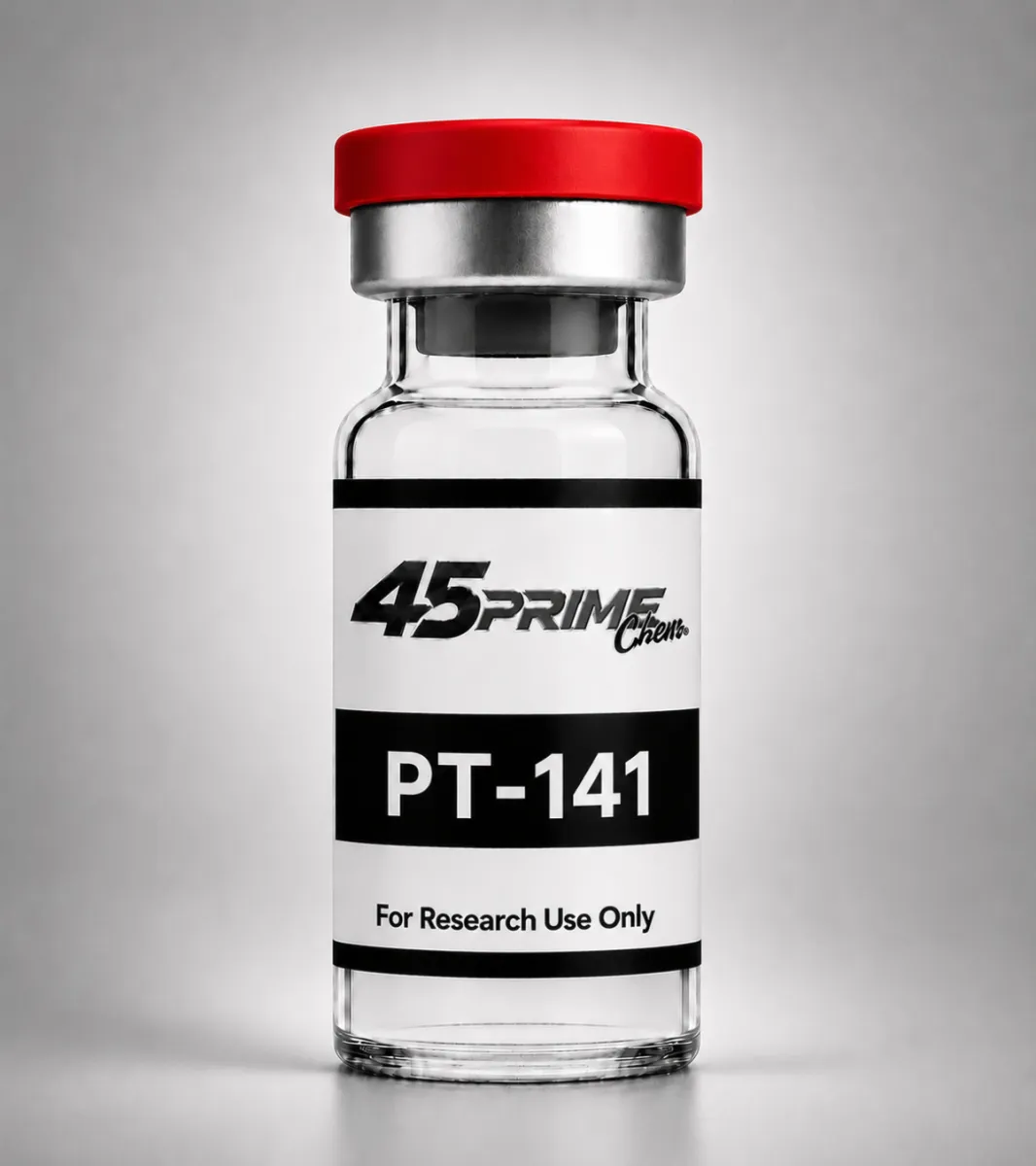
The most researched peptide for its role in sexual function and desire.
PT-141, also known as Bremelanotide, is a synthetic peptide derived from the α-MSH hormone. Unlike other compounds related to sexual function that act on blood flow, PT-141 has garnered significant scientific interest because it primarily acts on receptors in the central nervous system involved in desire and sexual response.
What is it?
PT-141 is a peptide designed to interact with melanocortin receptors present in the brain, where it is studied for its potential influence on desire and sexual function.
In short:
• Acts on the central nervous system to investigate its role in desire and sexual response.
How does it work?
PT-141 activates melanocortin receptors, especially MC4R, related to the regulation of sexual desire. Unlike medications that enhance circulation, this peptide aims to act on the brain mechanisms involved in sexual arousal.
What is science researching?
• Sexual desire.
• Central nervous system function.
• Female sexual dysfunction.
• Male sexual health.
• Melanocortin receptors.
What results have studies observed?
Research has reported trends such as:
• Increased sexual desire in some participants.
• Improvement in sexual response in certain studied populations.
• Interest in its action independent of blood flow.
• Potential usefulness in research on female and male sexual function.
What makes PT-141 different?
Unlike other treatments for sexual function, PT-141 does not primarily act on blood vessels, but rather on brain receptors related to sexual desire, representing a different mechanism of action.
What does it NOT do?
• Does not guarantee a sexual response in all individuals.
• Does not replace medical evaluation of sexual health issues.
• Does not act as a universal treatment for all types of sexual dysfunction.
• Its use depends on the indication and regulation of each country.
Why is it so well-known?
Because it was one of the first compounds to demonstrate that sexual function can also be addressed by acting on mechanisms of the central nervous system and not solely on blood circulation.
Interesting fact
• PT-141 was developed from research on Melanotan II, when scientists observed that some of its effects were not related to skin pigmentation but to the activation of receptors involved in sexual function.
Is this peptide for you?
If you are interested in learning about:
• Sexual function.
• Melanocortin receptors.
• Neuroscience.
• Research in sexual health.
• Biology of sexual desire.
PT-141 is one of the most studied peptides in this area of research.
Did you know?
Although many people know PT-141 for its relation to sexual health, its scientific importance lies in having demonstrated that sexual desire can also be regulated through mechanisms of the central nervous system. Its active ingredient, Bremelanotide, has been extensively studied, and one formulation is approved in some countries for the treatment of acquired and generalized hypoactive sexual desire disorder in premenopausal women, while other applications continue to be the subject of research.
Product intended for research use only (For Research Use Only). The information is educational and does not constitute medical advice, diagnosis, or treatment.
PT-141, also known as Bremelanotide, is a synthetic peptide derived from the α-MSH hormone. Unlike other compounds related to sexual function that act on blood flow, PT-141 has garnered significant scientific interest because it primarily acts on receptors in the central nervous system involved in desire and sexual response.
What is it?
PT-141 is a peptide designed to interact with melanocortin receptors present in the brain, where it is studied for its potential influence on desire and sexual function.
In short:
• Acts on the central nervous system to investigate its role in desire and sexual response.
How does it work?
PT-141 activates melanocortin receptors, especially MC4R, related to the regulation of sexual desire. Unlike medications that enhance circulation, this peptide aims to act on the brain mechanisms involved in sexual arousal.
What is science researching?
• Sexual desire.
• Central nervous system function.
• Female sexual dysfunction.
• Male sexual health.
• Melanocortin receptors.
What results have studies observed?
Research has reported trends such as:
• Increased sexual desire in some participants.
• Improvement in sexual response in certain studied populations.
• Interest in its action independent of blood flow.
• Potential usefulness in research on female and male sexual function.
What makes PT-141 different?
Unlike other treatments for sexual function, PT-141 does not primarily act on blood vessels, but rather on brain receptors related to sexual desire, representing a different mechanism of action.
What does it NOT do?
• Does not guarantee a sexual response in all individuals.
• Does not replace medical evaluation of sexual health issues.
• Does not act as a universal treatment for all types of sexual dysfunction.
• Its use depends on the indication and regulation of each country.
Why is it so well-known?
Because it was one of the first compounds to demonstrate that sexual function can also be addressed by acting on mechanisms of the central nervous system and not solely on blood circulation.
Interesting fact
• PT-141 was developed from research on Melanotan II, when scientists observed that some of its effects were not related to skin pigmentation but to the activation of receptors involved in sexual function.
Is this peptide for you?
If you are interested in learning about:
• Sexual function.
• Melanocortin receptors.
• Neuroscience.
• Research in sexual health.
• Biology of sexual desire.
PT-141 is one of the most studied peptides in this area of research.
Did you know?
Although many people know PT-141 for its relation to sexual health, its scientific importance lies in having demonstrated that sexual desire can also be regulated through mechanisms of the central nervous system. Its active ingredient, Bremelanotide, has been extensively studied, and one formulation is approved in some countries for the treatment of acquired and generalized hypoactive sexual desire disorder in premenopausal women, while other applications continue to be the subject of research.
Product intended for research use only (For Research Use Only). The information is educational and does not constitute medical advice, diagnosis, or treatment.
Specifications
| SKU | PEP-010 |
|---|---|
| Brand | 45PRIME |
| Unit of measure | UNIDAD |
| Category | Sexual health |
| Type | α-MSH analogue |
| Function | Research on sexual desire and function |
| Main research area | Central nervous system and melanocortin receptors |
| State | In research for various applications; a formulation of bremelanotide has been approved in some countries for a specific indication, while other uses are still under study. |
| Presentation | Vial 10 mg |
| Categories | ENERGY AND PERFORMANCE |
There are no reviews for this product yet.
Write your review
Sign in to leave a review.
There are no questions about this product yet. Be the first to ask!
Sign in to ask a question about this product.
Work out the concentration and how many units to draw on the syringe for the water you add.
mg
ml
Fill in the three fields to see the result.
Concentration
mg/ml
Volume to draw
ml
Mark on the syringe
units
Doses per vial
doses
The requested dose is larger than what the vial holds.
Research use only. This tool merely calculates the dilution from the figures you enter: it is not a dose recommendation or a use indication.
You might also like
PT-141 Vial 10 mg
Sign in to see the price